Terminal music player

Play your own music
without leaving the terminal.

ommp plays the files already on your disk: the CDs you ripped, the albums you went looking for, the folder you have been adding to for years. One command, and it plays.

Arch Linux
yay -S ommp
Anywhere else
cargo install ommp
Linux · Apache 2.0 · Source · crates.io · AUR

That is your album art, in a terminal.

The cover comes out of the file itself: the same image your tags have been carrying since you ripped the disc or paid for the download.

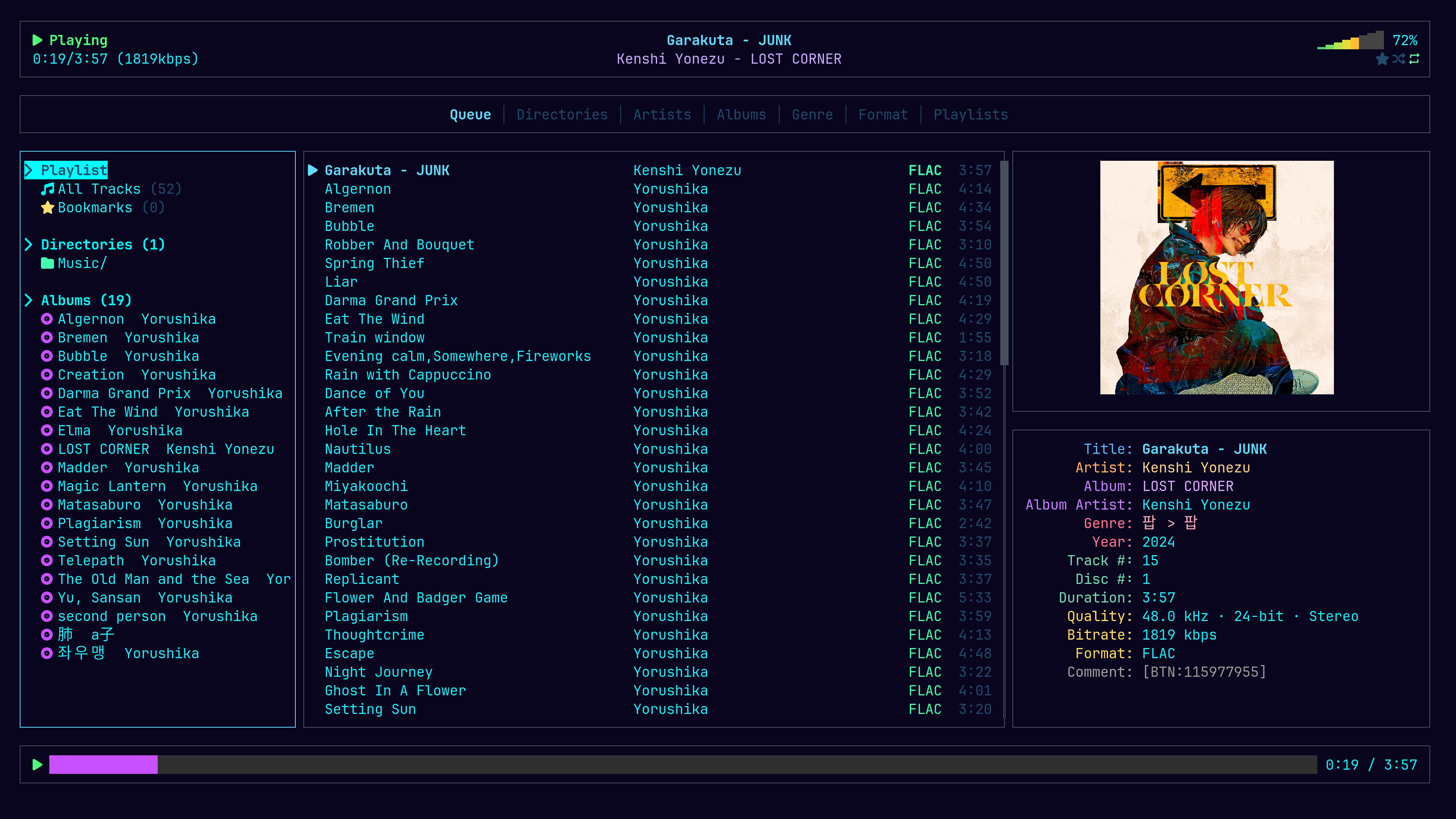
ommp playing a track: the library on the left, the queue in the middle, and on the right the album cover drawn as a real image above thirteen lines of track detail

In Ghostty, Kitty, WezTerm, Konsole, foot, xterm and Contour, ommp hands the artwork to the terminal's own graphics protocol and it arrives as a real image, grain and gradient intact, sitting in a shell next to your prompt. Terminals without one draw the same sleeve in block characters, coarser, and still recognisably the record you know.

Beside it, thirteen lines saying exactly what is playing, including the ones you went to some trouble over: 48.0 kHz, 24-bit, Stereo. Nothing there was fetched or guessed. All of it came off your disk, where it has been the whole time.

Nothing to start first.

No daemon in the background, no service to enable, no file to write before the first note. You type ommp, it reads ~/Music, and it plays.

Quit it and nothing of it keeps running. Everything it plays is already on your disk, so there is nothing to sign into, nothing to subscribe to, and nothing that stops working when a company changes its mind.

Ask it seven ways, or just type.

Press 1 to 7 to move along the tab strip: the queue everything lands in, the directory tree you built yourself, then artists, albums, genre, format and playlists. The same library, seven questions.

  1. Queue
  2. Directories
  3. Artists
  4. Albums
  5. Genre
  6. Format
  7. Playlists

Directories keeps the folders you organised, in the order you organised them. Genre is whatever you wrote in it. Format counts what you have of each: FLAC, MP3, M4A, OGG, WAV, Opus, AAC, WMA.

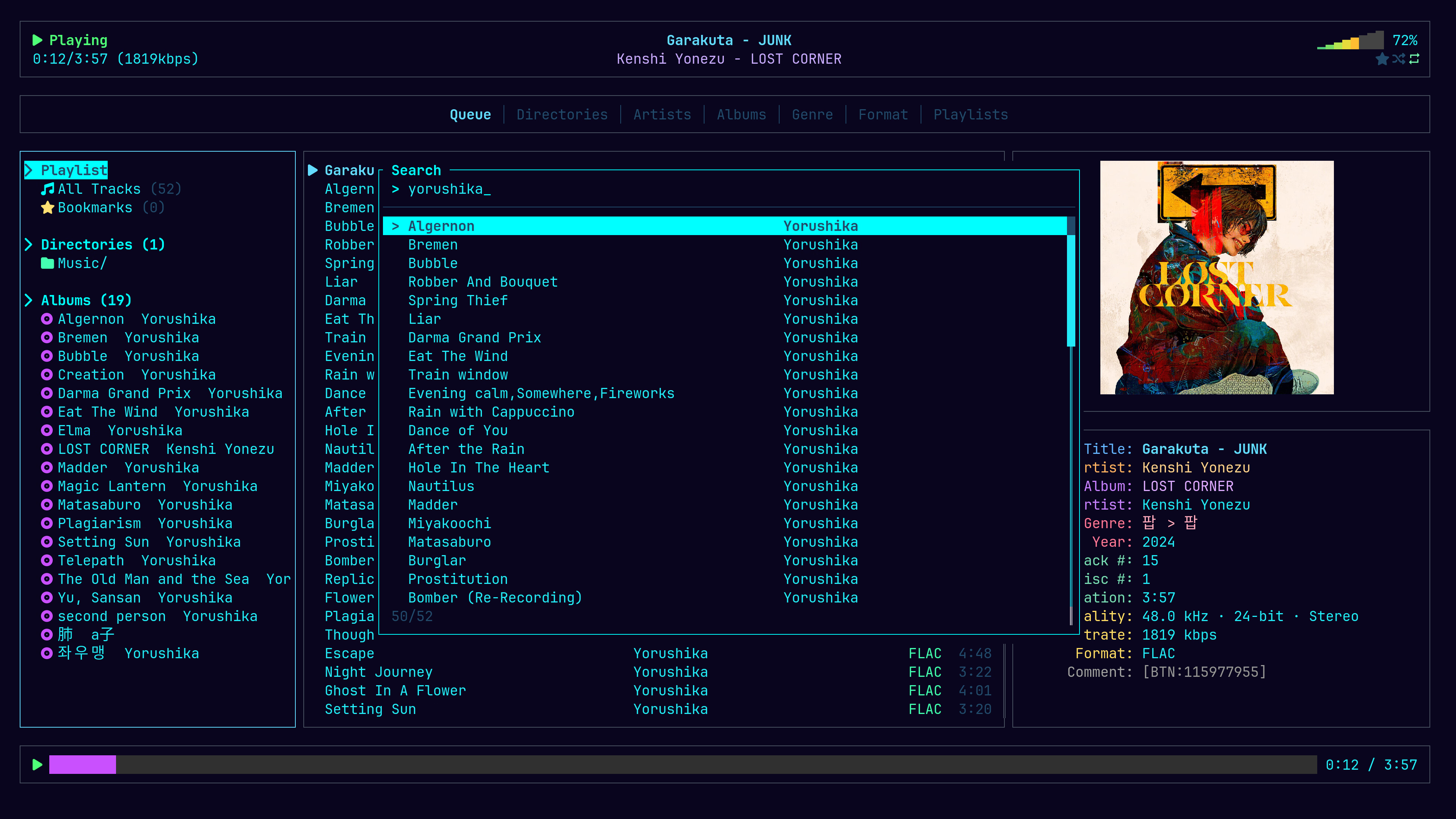
When you already know the name, Ctrl+S and start typing. The list narrows on every keystroke. Put artist:, album: or genre: in front to say which you meant, or type *.flac for when you own something twice and want the good copy.

The search overlay narrowing a library to fifty of its fifty-two tracks as the word yorushika is typed

Nothing quietly disappears.

The small decisions are the ones you notice on the second day.

Volume, shuffle, repeat, your playlists and the pane widths you dragged all come back the way you left them. The track does not. You choose that again.

h j k l, Space, n.

The keys already under your hands in every other window you have open.

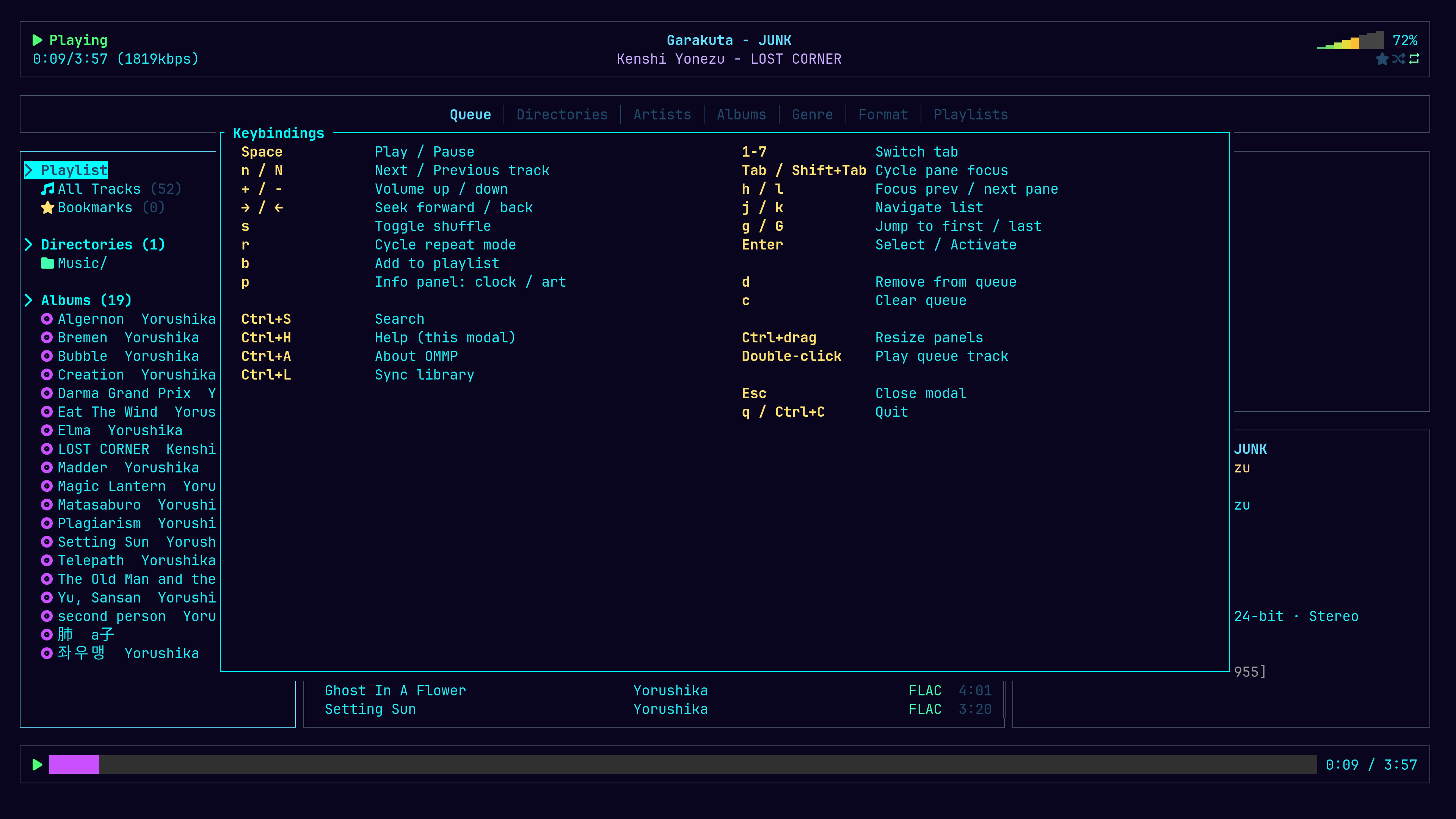
j and k move the list, g and G jump to the ends, h and l move between panes and Tab does the same. Space plays and pauses, n and N step through the queue, + and - take the volume, the arrows seek, s shuffles, r repeats, and b drops the playing track into a playlist. Ctrl+H lists every key there is.

The mouse works too, when your hand is already there: click a tab, double-click a track, Ctrl-drag a border to resize a pane.

The keybinding overlay open over the player, two columns covering playback and navigation

Install it.

Arch Linux
yay -S ommp
Anywhere else
cargo install ommp
Then put some music in ~/Music and run ommp.